There may be some situations where you might want to spice things up by arpeggiating chords. Arpeggios are simply chords, however you play the individual notes that make up that chord. They are also very useful when you’re soloing over chord changes, because then you can highlight the chords, and make you solo blend seamlessly over every chord. In this lesson, I show you a few arpeggio shapes and how to apply them.
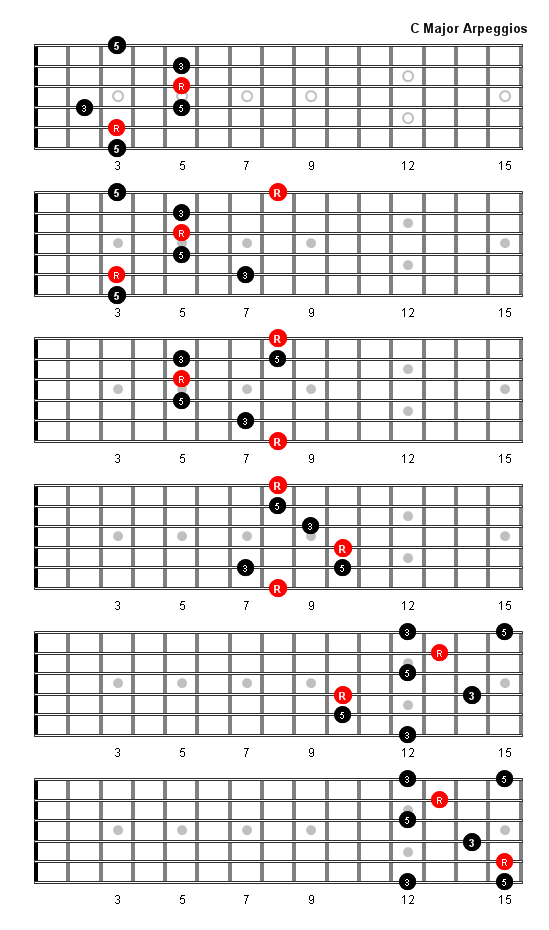
So let’s say you want to arpeggiate a C Major chord. Well, first you would need to find those notes on the neck and strum as you normally would, but in this case, we are going to pick individual notes. It’s up to you which pattern you would like to choose. You can make specific notes stand out and leave out the ones that maybe don’t fit with the piece of music you are playing. When you’re playing chord changes, it makes sense to pick notes within that shape. But when you’re soloing, it’s better to take a different approach.
The following shapes involve using the scales that belong to the chords. So if you have a chord progression with four chords, you need to find those four particular scales. The next step is to get the chord tones of those chords. By chord tones, I just mean the root, third, fifth, and any other extensions. This way it will be easier to play melodic lines using these chord tones. So I hope this lesson was useful for your soloing purposes.
 Guitar: A Divergent Path