A scale is a set of tones which are ordered according to their pitch. They can be used to create melodies, harmony, and everything in between. There are many different scales with distinct tonalities, but to help you understand, we’ll go over the basic fundamentals of creating a scale.
The most important scale that you should be familiar with is the chromatic scale. This is because the chromatic scale is every note on the neck. It’s where every other scale is derived from. It doesn’t sound musical by any means, but it can come in handy when your soloing and you want to add in some chromatic notes to spice things up.
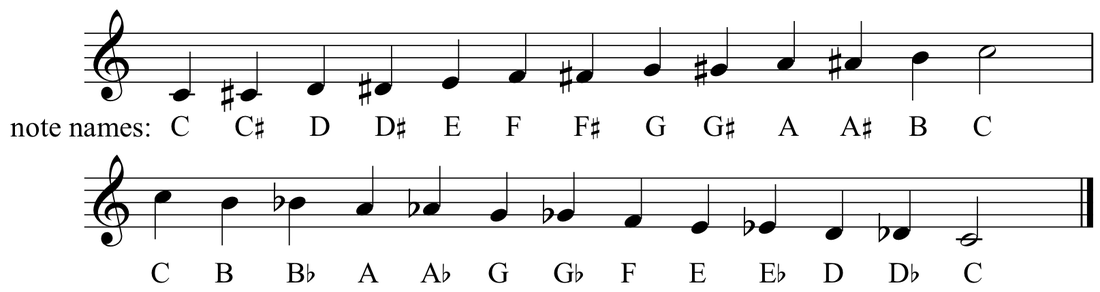
The chromatic scale has 12 notes: A, A#, B, C, C#, D, D#, E, F, F#, G, G#. The notes B and E are the only ones that don’t have a sharp. Each note is just a half step from each other. And remember, you can start on a different root note. For example, if G# is the first note and you go 12 half steps to reach the octave, then it will be the G# Chromatic Scale. The interesting thing about scales on guitar is that they can be played in many different places on the neck. Just start on C anywhere on the guitar and play on fret after the other until you reach back to C. Here’s an example of what it looks like notated.
 Guitar: A Divergent Path